Most data centres in Southeast Asia were designed for enterprise and cloud workloads, with racks drawing 5 to 15 kW and cooled by air. AI changes that. GPU clusters for training and inference commonly need 40 kW per rack, and some current designs go well beyond 100 kW. In a tropical climate like Indonesia's, those densities change almost every design decision, from the cooling plant to the floor slab.
Why air alone runs out
Air is a poor carrier of heat. As rack power rises, pushing enough cold air through the servers needs more fans, wider aisles and larger air handlers, until it stops being practical. Somewhere in the range of a few tens of kilowatts per rack, most designs turn to liquid cooling. Air still has a place for storage, networking and lower-density racks in the same building.
There are three common approaches:
- Rear-door heat exchangers. Liquid-cooled doors on the back of each rack take heat out of the exhaust air. A useful bridge for moderate densities and retrofits.
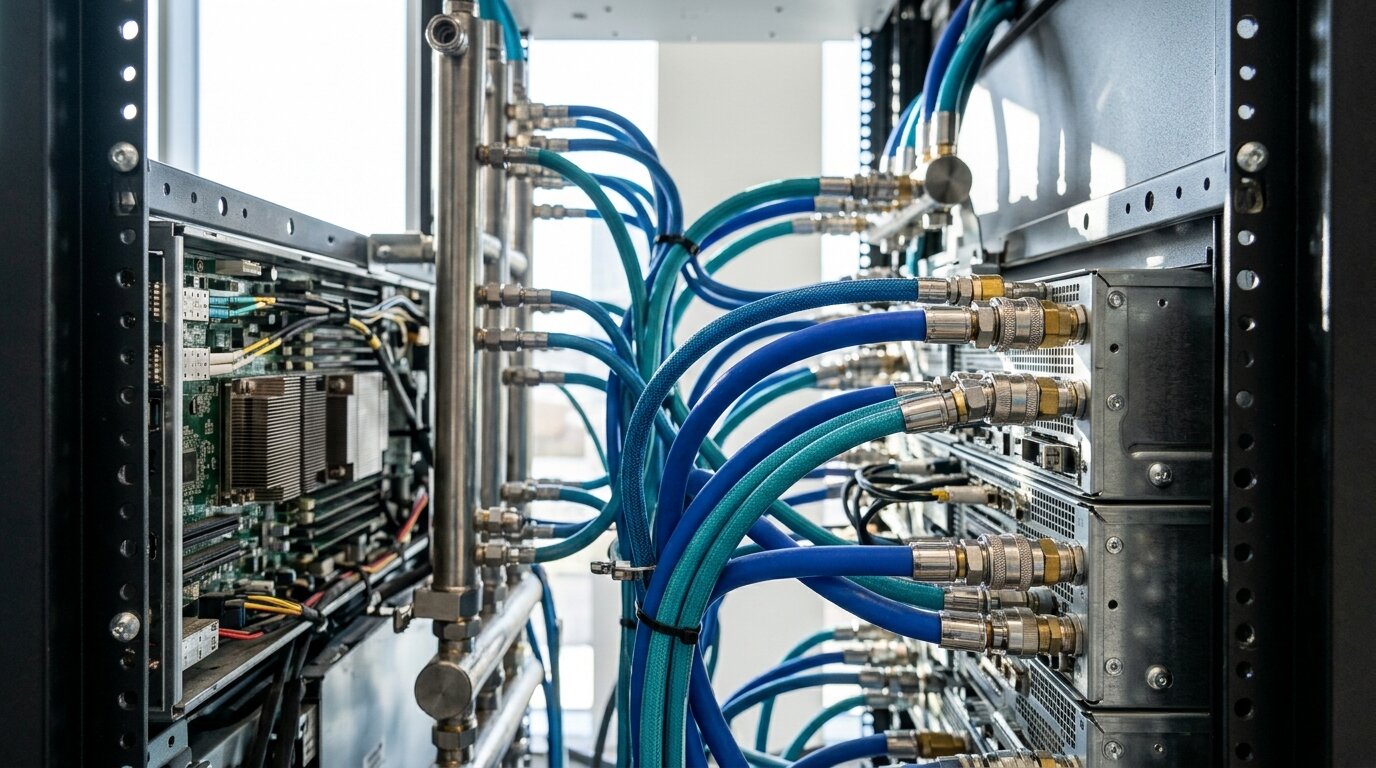
- Direct-to-chip cooling. Coolant flows through cold plates on the processors and carries most of the heat away at the source. Now the usual choice for dense AI clusters. See direct-to-chip cooling.
- Immersion cooling. Servers sit in tanks of dielectric fluid. Very effective, but it changes how hardware is serviced and supported.
In practice most AI halls are hybrid. Liquid takes the bulk of the heat from the GPUs, while air still handles the remaining equipment and the room itself.
The tropical factor
In cooler climates, data centres can use outside air or cool water for much of the year, known as free cooling. In Indonesia, temperatures and humidity stay high all year, so free-cooling hours are limited. Cooling has to be mechanical most of the time, and it is the largest overhead on top of the IT load.
Liquid cooling helps here. Warm-water loops can run at higher temperatures than chilled-air systems, which reduces the work the chillers do and makes heat rejection easier even on hot days. Designing for higher water temperatures from the start is one of the most effective ways to bring PUE down in the tropics.
Humidity also needs managing inside the hall, to avoid condensation on cold surfaces and to keep conditions within equipment tolerances. That matters more when cold liquid runs close to electronics. A well-sealed building envelope and careful control of outside air help too.
Power, weight and space
Dense racks change the electrical design. Higher power per rack favours overhead busway over long cable runs, transformers closer to the load and careful thought about redundancy. Familiar N+1 and 2N schemes still apply, but at AI scale each extra unit of redundancy is expensive, so the level should match what the customer is actually buying.
Weight matters too. A fully loaded AI rack with liquid cooling is far heavier than a conventional one, so floor slabs need to be specified for it. Many new AI halls use slab floors with services overhead for this reason.
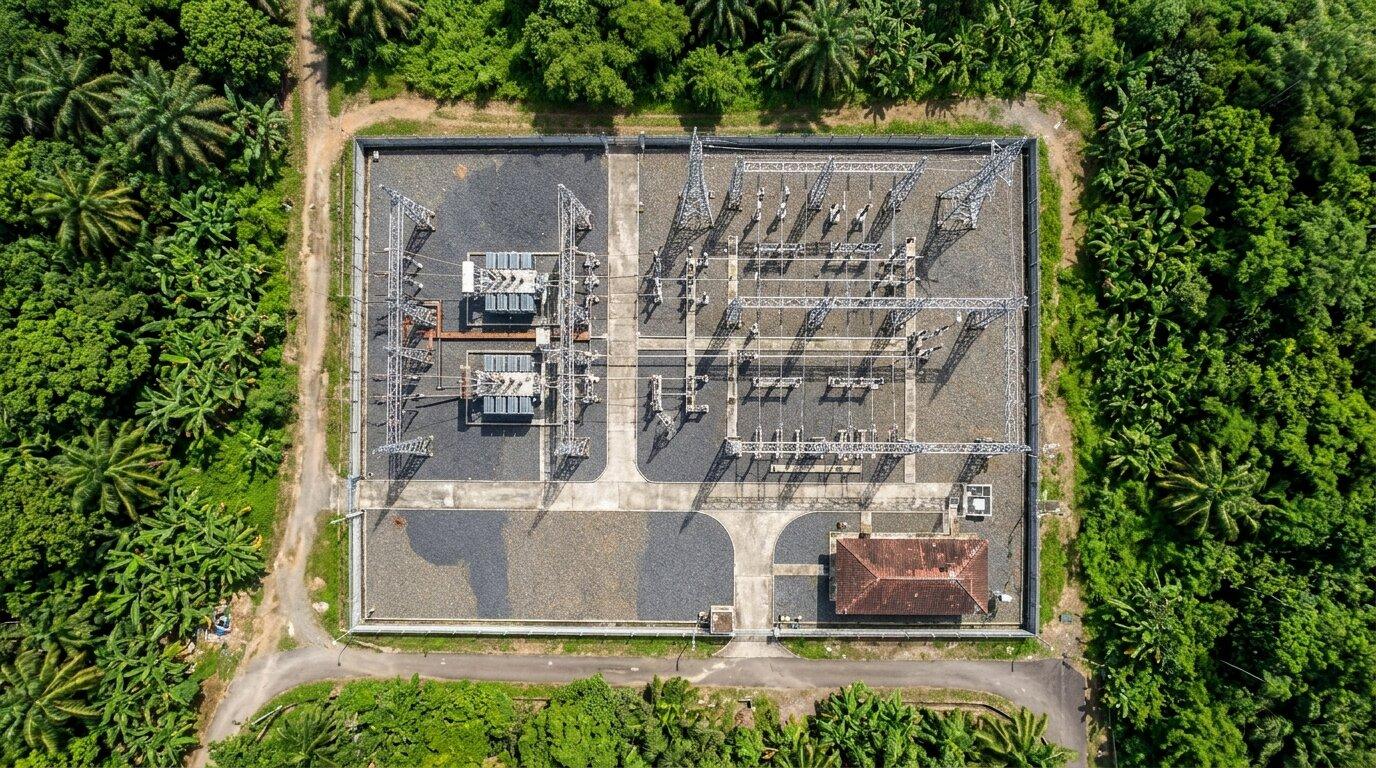
Because so much of the building is now plant, the balance between white space and mechanical and electrical space shifts. Site plans need room for chillers, heat rejection, transformers and generators, and for the next phase of each. Large electrical equipment can take a long time to procure, so order early.
Water
Some cooling systems consume water through evaporation, while closed-loop liquid systems use very little once filled. In Indonesia, water availability and local sensitivity vary from place to place, so the cooling choice should be tested against the site's water supply and the community's expectations. Where water is scarce or contested, dry coolers and closed loops are the safer choice, even at some cost in efficiency. That is part of the Ground and Growth work as much as the engineering.
Site risks to design out
- Flooding. Heavy tropical rain can overwhelm drainage. Set floor levels above credible flood levels and keep critical plant off the lowest ground.
- Storms and lightning. Frequent thunderstorms call for robust lightning protection and surge protection on incoming power and fibre.
- Coastal air. Salt speeds up corrosion of outdoor plant at coastal sites. Specify coatings and filtration to suit.
- Seismic risk. Parts of Indonesia are seismically active. Structural design should follow local codes and site-specific studies.
Networking shapes the layout
AI clusters are tightly networked. GPUs within a cluster exchange data constantly over high-bandwidth links with strict limits on cable length. That pushes designers to keep cluster racks close together, which concentrates heat and power into a smaller area than a conventional hall. The network, cooling and power layouts have to be planned together, not one after another.
Commissioning and operations
Liquid cooling brings new operating routines: water treatment, leak detection, maintenance of pumps and coolant distribution units, and procedures for swapping hardware without draining loops. Commissioning should test the liquid systems as thoroughly as the electrical ones, under realistic heat loads, and the operations team needs training in both. In Indonesia, experienced liquid-cooling technicians are still scarce, so plan for training, vendor support and good documentation from the start.
New build or retrofit?
Retrofitting an existing air-cooled hall for AI is possible at moderate densities, usually by adding rear-door or direct-to-chip cooling rack by rack. For high-density training clusters, the power, weight and cooling demands usually favour purpose-built halls. A powered shell designed for liquid cooling from the start can then be fitted out to each customer's hardware.
What this means for you
If you are planning AI capacity in Indonesia, start the design from the compute: the hardware, its density and its cooling. Then work outwards to the building, the power and the site. Our GPUs work does exactly that, alongside operators and hardware partners. If you have a site or building in mind, check it against the six Gs.