Skip to content
Infrastructure
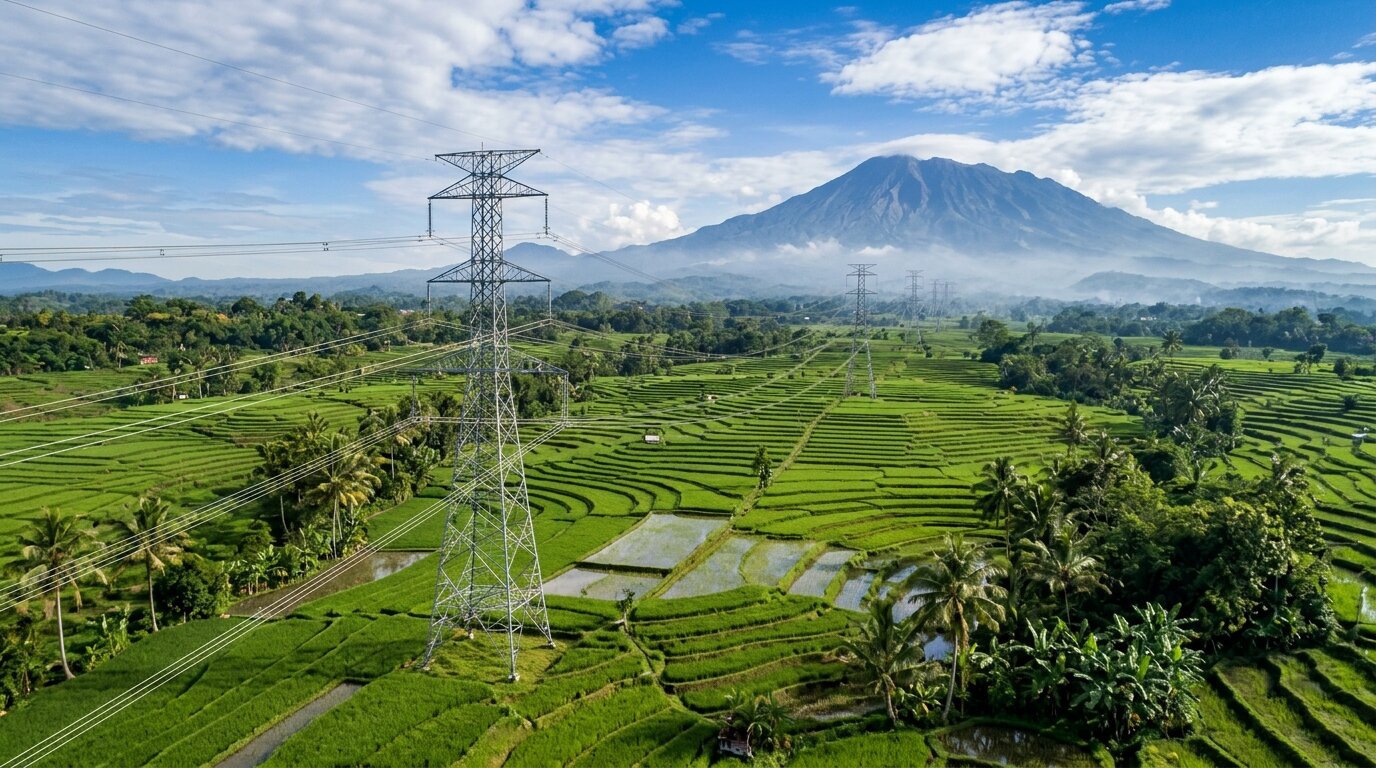
High-voltage pylons crossing terraced rice fields in Java, with a volcano behind

Grid connection and PLN power for data centres in Indonesia

Power decides more data centre sites than land does. We work the grid connection from the first feasibility question to the day the site is energised.

Grid, 2 of 6

A connection date you can plan a business around.

Every data centre in Indonesia ultimately depends on PLN, the state-owned utility that runs nearly all of the country's transmission and distribution. A site can have clean title, a willing buyer and a finished design, and still sit idle because the nearest substation is full or a new line is years away.

So we test the grid first, not last. Before a site is presented to anyone, we want to know how much capacity is available nearby, what reinforcement is planned, how a connection would be routed and what PLN will need in order to agree it. Our article on why the grid, not the land, decides AI sites explains the thinking.

What we secure

  • Spare capacity at nearby substations
  • Connection route and substation plan
  • Applications and agreements with PLN
  • Redundant supply and backup design

Where projects stall

A site with land and a buyer can still wait years for power. We test the grid first, not last.

How grid power reaches a data centre

Large data centres normally connect at high voltage, either at an existing PLN substation or through a new substation built for the site. The voltage, the number of incoming circuits and the distance to the network all shape cost and timing. Campuses planned for AI workloads often need a dedicated substation from the outset.

The Java-Madura-Bali system is the country's largest grid, with a 500 kV backbone linking major power plants and load centres. Other islands run their own systems, some far smaller. Where a site sits on that map matters as much as where it sits on a road map.

  • Connection voltage: set by the load and by what the local network can carry
  • Redundancy: two independent supplies where the design and the network allow it
  • Substation ownership: who builds, owns and maintains the new equipment
  • Timing: when capacity can really be delivered, phase by phase
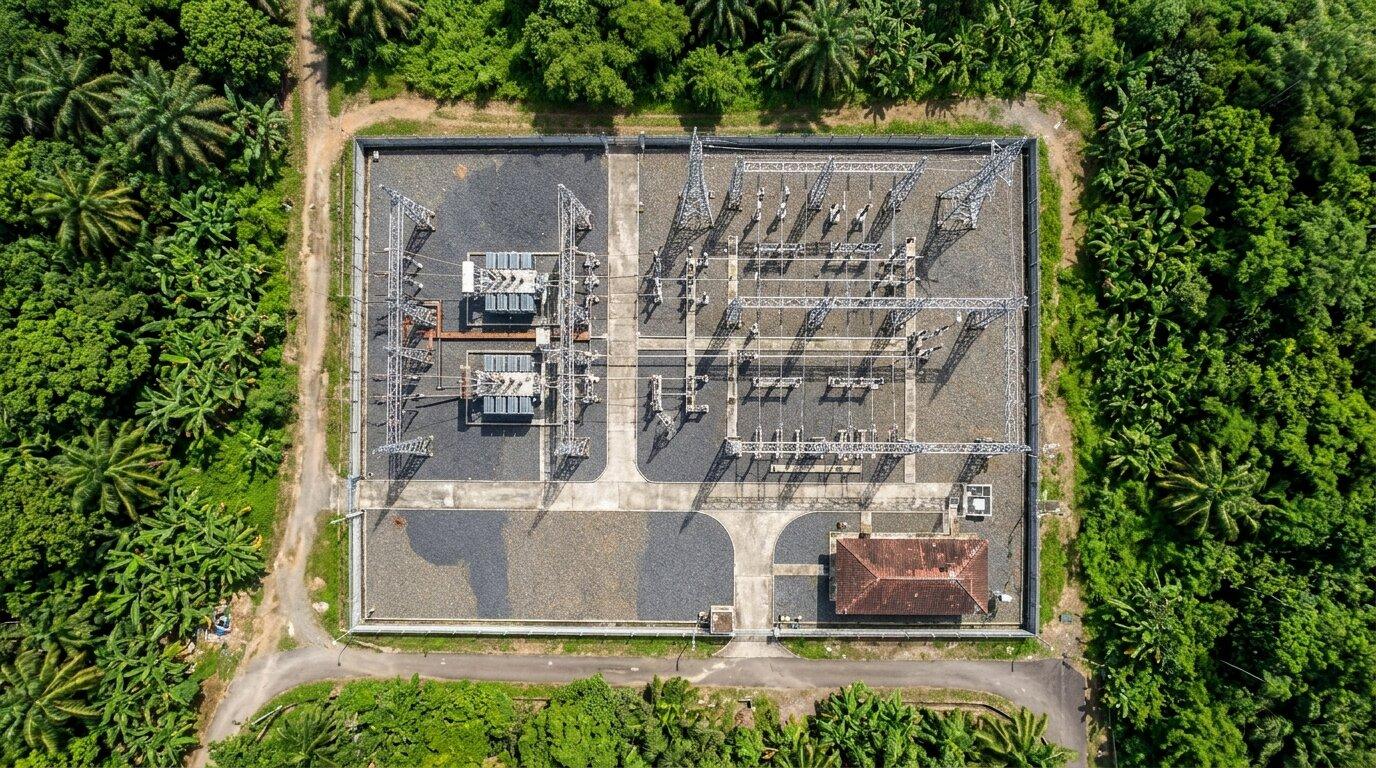
A high-voltage substation seen from directly above, surrounded by tropical trees

Reading PLN's plans

PLN publishes a ten-year electricity supply plan, the RUPTL, which sets out new generation, transmission lines and substations by region. The latest plans put a large share of new capacity into renewables. We read them against each site to see whether reinforcement is already on the way, or whether a project would be asking for something new.

Plans change, and a line on a plan is not a connection. We treat them as a starting point, then test them through direct engagement with PLN and with engineers who know the local network well.

Redundancy, backup and resilience

Customers buying cloud and AI capacity expect very high availability. In practice that means two separate supply paths, transformers sized for failure scenarios, and backup generation able to carry the full critical load. Designs aimed at Uptime Tier III or Tier IV set clear expectations for how much redundancy is needed.

We make sure the grid design and the building design are agreed together. A substation layout that suits the network but not the electrical and cooling plan inside the halls adds cost later. So does the reverse.

When the grid is not ready

Sometimes the nearest spare capacity is years away. That does not always end a project. The options include phasing the build so the first hall runs on what is available now, contributing to network reinforcement, or adding generation on site. Each carries its own cost and rules, and some depend on PLN's agreement.

We set out those options plainly, with the trade-offs, so owners and investors can decide whether a site is still worth pursuing. Longer-term supply, including renewables, is covered under Gigawatts.

What we check before we call Grid secured

  • Spare capacity

    Available load at nearby substations today, and how much is already committed to other users.

  • Planned reinforcement

    New lines and substations in PLN's plans that could serve the site, and their likely timing.

  • Connection route

    The path for new lines or cables, the land they cross and the permits they need.

  • Voltage and layout

    The right connection voltage, the number of circuits and the substation arrangement.

  • Redundancy

    Whether two independent supplies are possible, and how backup power covers the gaps.

  • Phasing

    How much power each phase needs, and when the network can supply it.

What you get

Want a quick read first? The site check scores your project against all six Gs in two minutes.

Check a site against the six
  • A grid feasibility summary for the site
  • Connection options with cost and timing ranges, prepared with engineering partners
  • A plan for the PLN application and the agreements that follow
  • A phased power schedule matched to the build plan
  • A clear list of the risks that could delay energisation

Questions we're often asked

Who supplies grid power to data centres in Indonesia?

PLN, the state-owned utility, which runs nearly all transmission and distribution. Large users connect to PLN's network, usually at high voltage, under agreements negotiated with PLN.

How long does a grid connection take?

It depends on whether capacity already exists nearby. Where a substation has room, a connection can move relatively quickly. Where new lines or substations are needed, it can take several years. That is why we check the grid before anything else.

Can a data centre build its own substation?

Often, yes. Large campuses commonly have a dedicated substation, with ownership and operating arrangements agreed with PLN. We help structure that so it suits both the network and the campus.

Can we buy renewable power through the grid?

PLN sells renewable energy certificates and offers green energy products, and its supply plan adds a large share of renewables. Our Gigawatts page and our guide to renewable power for data centres set out the options.

What if the grid near our land is full?

We look at phasing, reinforcement, alternative connection points and on-site generation. If none of them gives a date you can bank on, we will say so, and help you find land where the grid works.

Do you deal with PLN directly?

We prepare and manage the engagement with PLN alongside the project owner and its engineers. Agreements are signed by the project company, but we make sure the right questions are asked early.

Next of the six Gs

GPUs

The partners that turn a powered building into AI capacity.

Have land, power or capital in Indonesia?

Tell us what you have. We'll tell you plainly whether it can carry an AI campus, and what it would take.