Skip to content
Infrastructure
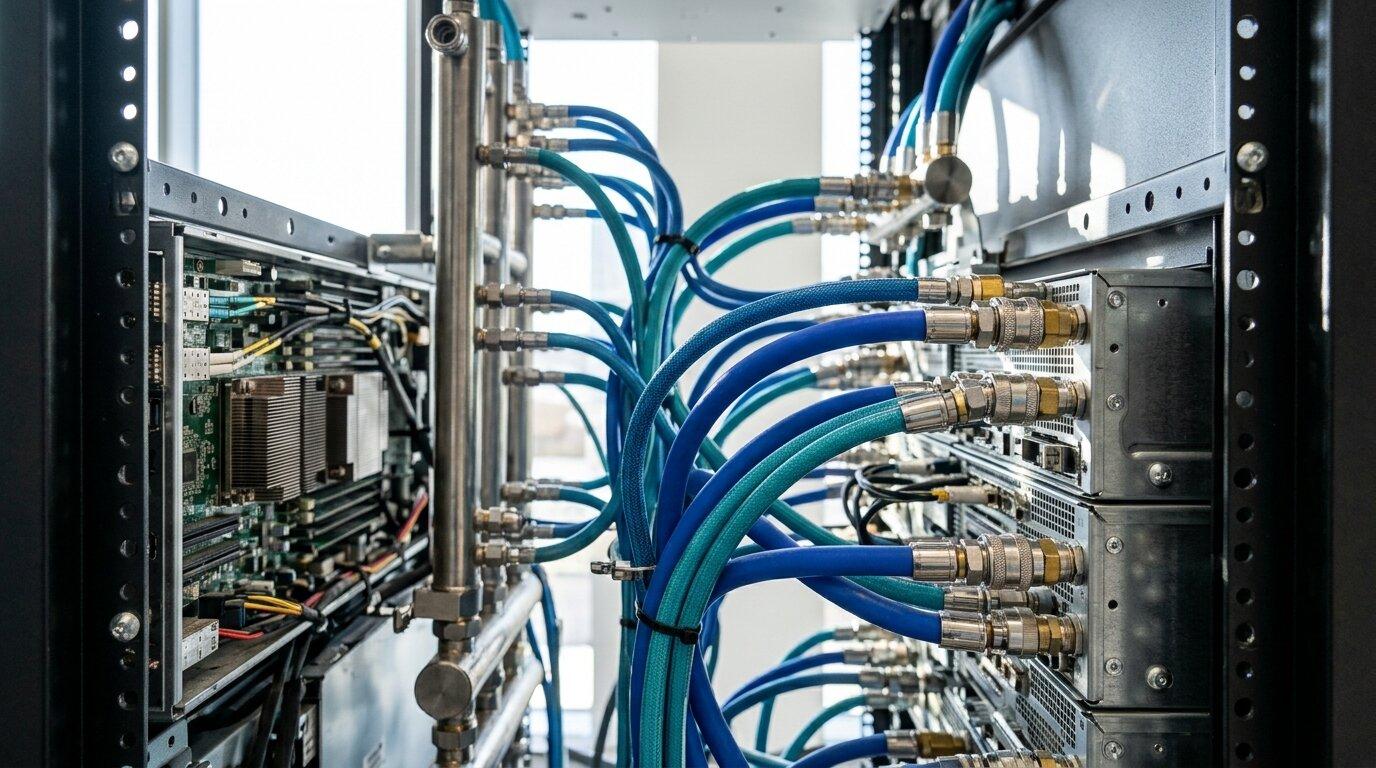
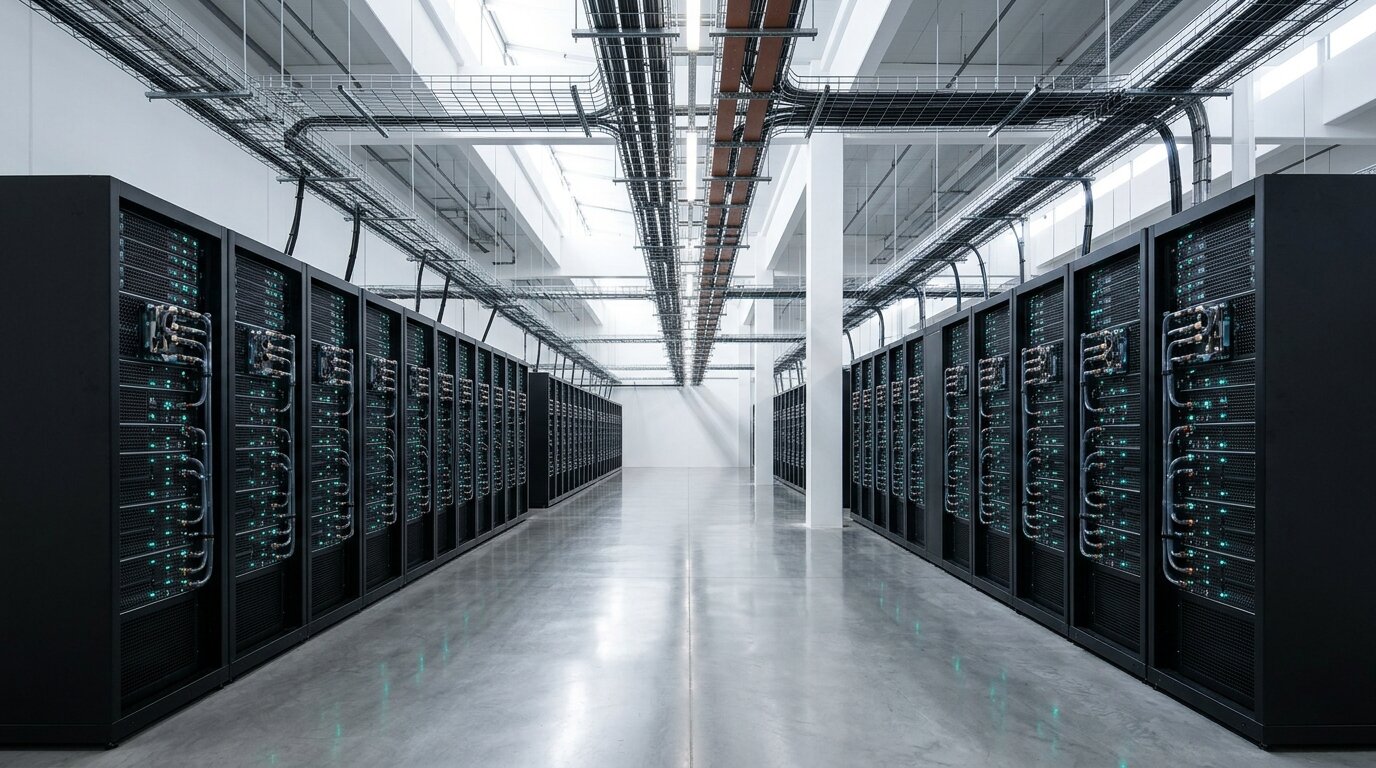
Rows of GPU server racks with liquid cooling inside a new data hall

AI compute, GPU partners and high-density design

An AI data centre is defined by what goes inside it. We start from the compute, then shape the building, the cooling and the partners around it.

GPUs, 3 of 6

The partners that turn a powered building into AI capacity.

Traditional enterprise racks often draw 5 to 15 kW. Racks built for AI training and inference can draw 40 kW and well beyond 100 kW, and the hardware changes every year or two. A building designed only for the first case cannot simply be upgraded to the second.

That gap is where many projects lose time. We bring the people who will run and fill the halls into the project early: operators, GPU cloud providers and hardware suppliers. Their requirements become the design brief, so the building is ready for the compute that actually arrives.

What we secure

  • Operators and GPU cloud partners
  • High-density and liquid-cooling design
  • Hardware supply and delivery timing
  • Fibre routes and carrier connections

Where projects stall

A building designed for yesterday's racks can't take today's GPUs. The design has to start from the compute.

Designing for density

High-density AI halls change almost every part of a data centre. Floors carry heavier racks. Power distribution moves more current to each row. Cooling shifts from air towards liquid, using direct-to-chip cold plates, rear-door heat exchangers or immersion. The mechanical yard, pipework and water treatment all grow with it.

We work with design partners to agree a target density and a cooling approach before the building is fixed. Most campuses now plan a mix: air-cooled space for networking and enterprise loads, and liquid-ready space for GPUs.

  • Rack density: a target per rack and per hall, with headroom for the next generation
  • Cooling: air, liquid or both, and where the heat is rejected
  • Power distribution: busways, switchgear and UPS sized for dense rows
  • Structure: floor loading, ceiling height and space for pipework
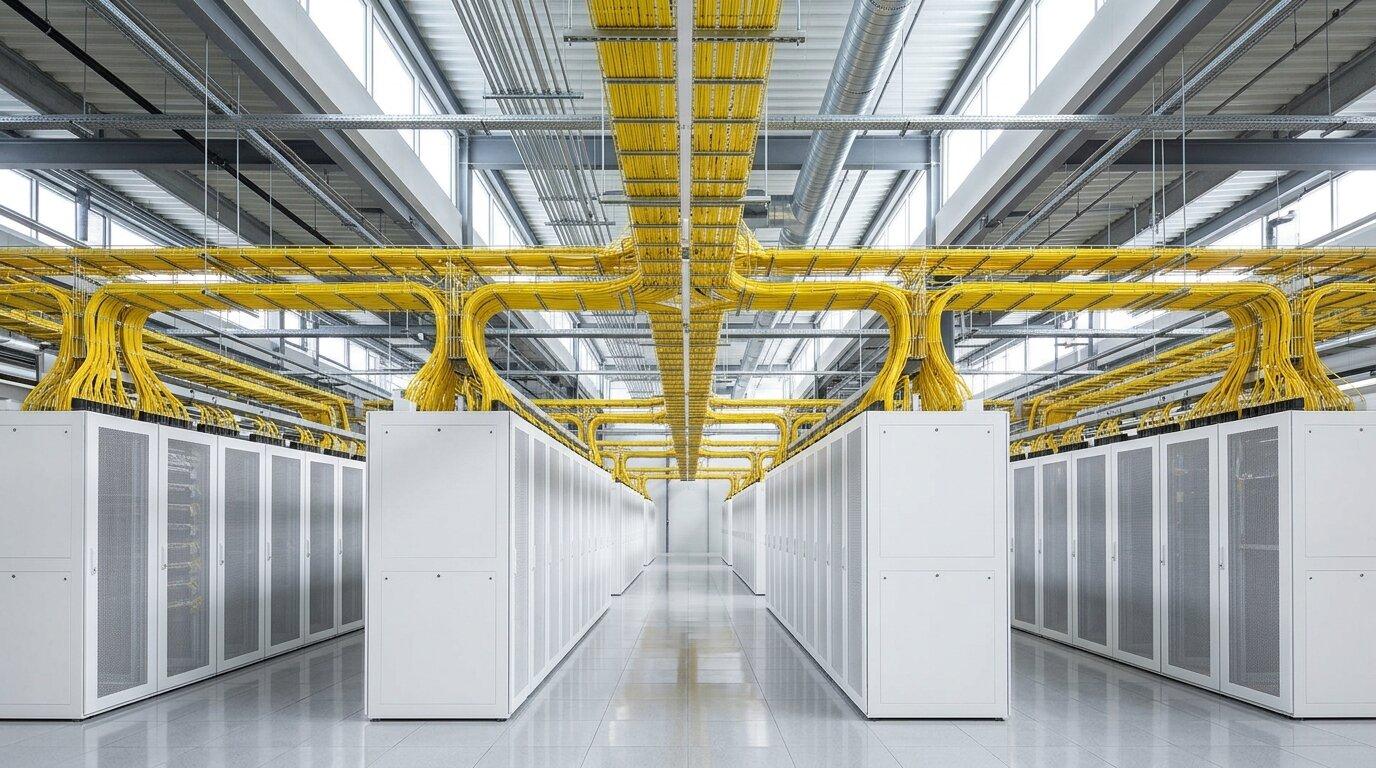
Yellow fibre optic cables running overhead into cross-connect cabinets in a data centre

Cooling in a tropical climate

Indonesia's heat and humidity limit the hours when outside air can cool a building for free. That puts more weight on efficient chillers, liquid cooling and careful humidity control. It also makes the power usage effectiveness (PUE) target a genuine design decision rather than a brochure figure.

Liquid cooling helps, because it carries heat away at higher temperatures and needs less mechanical cooling. Our guide to AI data centre design in the tropics goes into the detail.

Choosing the right compute model

There are several ways to put GPUs into a building. A hyperscaler or AI company may lease space and bring its own hardware. A specialist GPU cloud provider may install and run the compute, then sell capacity as a service. An operator may run the facility while a third party owns the servers. Each model needs a different contract, design and timetable.

We match the model to the site and the buyer, bring the parties together, and check that the design, the power and the commercial terms line up. The delivery models we use are set out on how we work.

Connectivity and supply chains

AI capacity also needs strong fibre links, a choice of carriers and, for many customers, low latency to users in Jakarta or Singapore. We check fibre routes and carrier options as part of site selection.

Hardware supply is the other constraint. Lead times for GPUs, switchgear, transformers and chillers can be long. We plan ordering around the construction and grid timetable, so equipment does not arrive before the building can power it.

What we check before we call GPUs secured

  • Target density

    Power per rack and per hall today, with headroom for later hardware.

  • Cooling approach

    Air, direct-to-chip, rear-door or immersion, and the plant each one needs.

  • Compute model

    Who owns the hardware, who runs it and who sells the capacity.

  • Partner capability

    The track record of the operators and GPU providers we bring to the table.

  • Fibre and latency

    Routes, carriers and latency to the users the capacity will serve.

  • Equipment lead times

    Delivery timing for GPUs and long-lead electrical and cooling plant.

What you get

Want a quick read first? The site check scores your project against all six Gs in two minutes.

Check a site against the six
  • A design brief built from the compute requirement
  • A shortlist of operators and GPU partners suited to the site
  • A cooling and density strategy agreed with design partners
  • A procurement timeline aligned with construction and energisation

Questions we're often asked

What makes a data centre AI-ready?

Mainly power density and cooling. An AI-ready hall can deliver tens of kilowatts or more to each rack and remove that heat, usually with liquid cooling, while leaving room for heavier and hotter hardware in future.

Do AI data centres need liquid cooling?

Most high-density GPU deployments now use some form of liquid cooling, such as direct-to-chip cold plates or rear-door heat exchangers. Lower-density inference and enterprise loads can still run on air.

Can an existing data centre be upgraded for GPUs?

Sometimes, within limits. Power, floor loading and cooling capacity usually cap what is possible. We assess the building honestly and compare an upgrade with a purpose-built hall.

Do you supply GPUs?

No. We bring in the operators, GPU cloud providers and suppliers who do, and make sure the building and the commercial deal fit what they need.

What is GPU-as-a-Service?

A model where a provider owns and runs the GPU hardware and sells compute capacity to customers, by the hour or on longer contracts. It suits buyers who need AI capacity without owning servers. See how we work.

Who buys AI capacity in Indonesia?

Global cloud and AI companies, Indonesian enterprises and technology firms, and public bodies building national digital services. Our page for hyperscalers and AI compute buyers explains how we work with them.

Next of the six Gs

Gigawatts

Power for every phase, not just the first.

Have land, power or capital in Indonesia?

Tell us what you have. We'll tell you plainly whether it can carry an AI campus, and what it would take.