Skip to content
Infrastructure
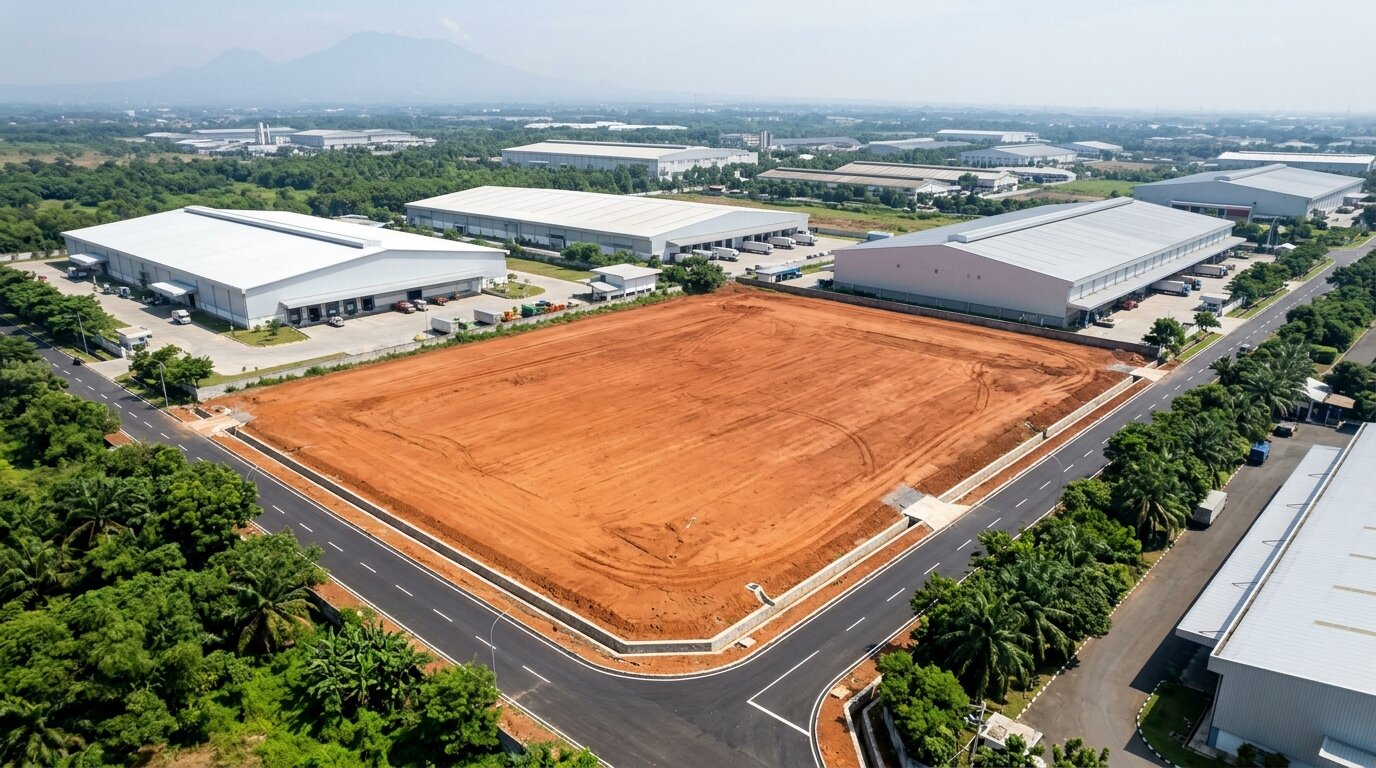
A freshly graded plot of red earth in an industrial estate east of Jakarta

Data centre land and site selection in Indonesia

The right plot is the first of the six Gs, and every other G depends on it. We find land that can hold a campus for decades, then prove it before anyone signs.

Ground, 1 of 6

Land that can carry a campus for decades.

Most land offered for data centres in Indonesia looks fine on a map. The problems appear later: a title registered to someone other than the seller, a zoning plan that still says agriculture, a river that floods every few years, or a plot too small for the second hall. Any one of them can cost a project a year, or end it.

We treat land as an engineering question and a legal question at the same time. Before a site goes to an investor or operator, we test the title, the spatial plan, the ground and the access against what a campus actually needs. Then we check it against the other five Gs, starting with the grid connection, because land without power is only land.

We work with landowners, industrial estates and developers across Indonesia. We are just as useful when the honest answer is no.

What we secure

  • Clean title, checked back to the source
  • Zoning and land-use fit
  • Flood, seismic and soil risk reviewed
  • Access and space for later phases

Where projects stall

A foreign-owned project company can't hold freehold. It builds on HGB, a right-to-build title with a fixed term, and deals stall when nobody traces that title early.

What makes land right for a data centre

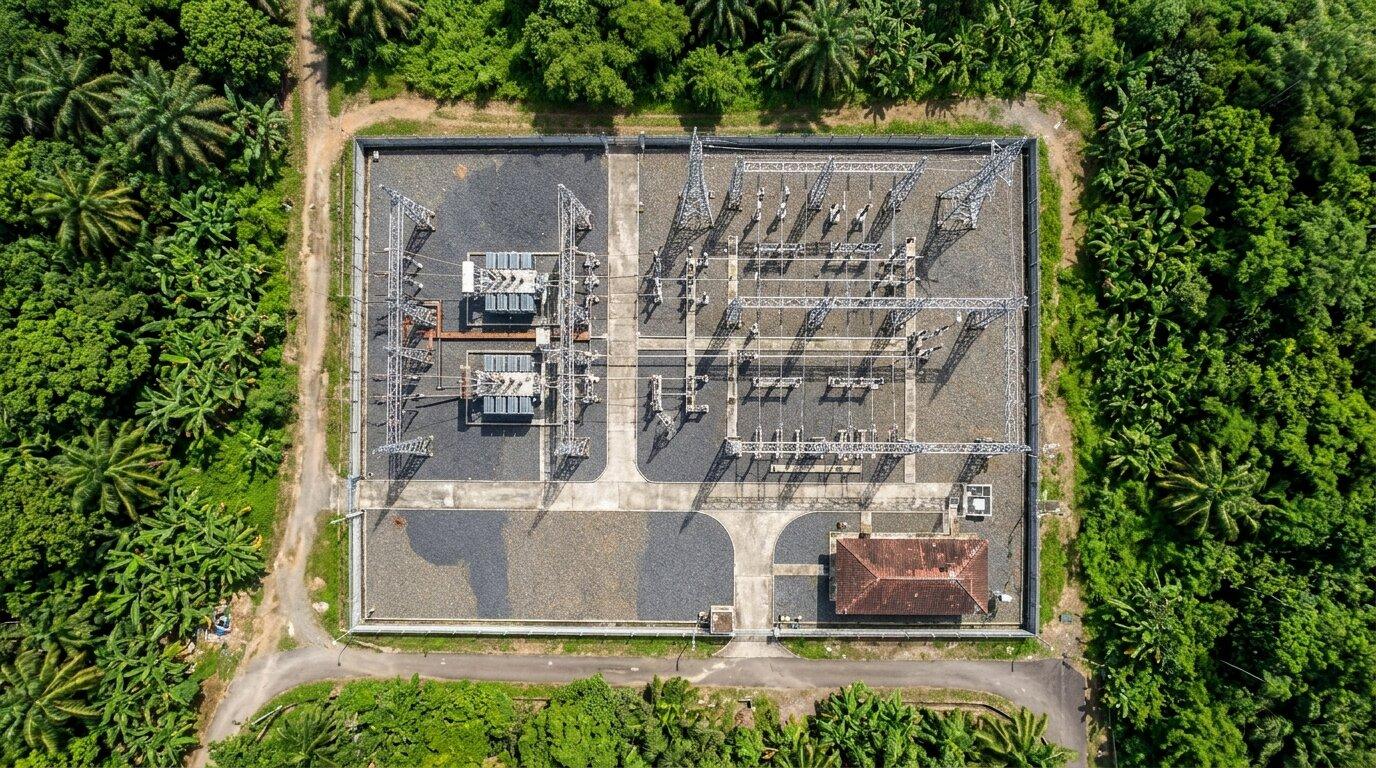
A data centre plot has to do more than hold a building. It needs to sit near a substation with spare capacity and close to fibre routes, above flood levels, and inside a zone where the regional and detailed spatial plans allow the use. Its size and shape must leave room for every phase that follows.

AI campuses push these needs further. A hall built for GPU workloads can draw many times the power of an enterprise data centre, and the yard space for substations, chillers, generators and fuel grows with it. Plots that suited a small facility a decade ago are often too tight now.

  • Size and shape: enough area for the full build-out, plus setbacks and yard space
  • Ground conditions: stable soil, low flood exposure and understood seismic risk
  • Proximity: distance to substations, fibre routes and the users who need low latency
  • Access: roads and bridges that can carry transformers and heavy plant
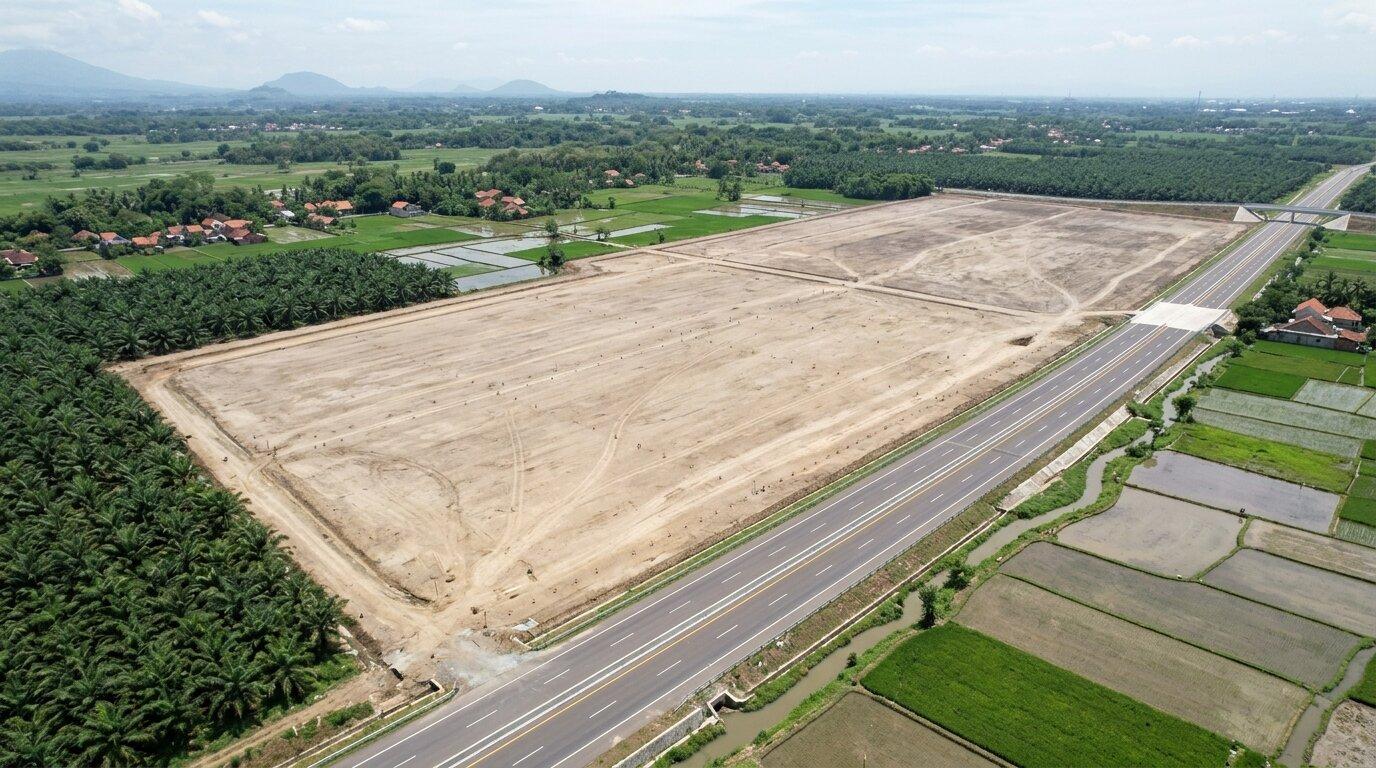
A large cleared land parcel beside a new highway in West Java, with survey pegs in a grid

Land title for foreign-owned projects

Foreign-owned companies in Indonesia (PT PMA) cannot hold freehold land. They hold a right to build, known as HGB (Hak Guna Bangunan). Under Government Regulation 18 of 2021, the first HGB term runs for up to 30 years, can be extended by up to 20, and can then be renewed for up to 30 more.

That structure suits long-lived infrastructure, but only when the detail is right. We check the current registered holder, whether a freehold title must first be converted, how much of an existing term has already run, and whether the plot sits inside an industrial estate where the HGB is granted over the estate's management right (HPL). Each route has its own timing and its own risks.

Our glossary explains the main land terms, and our guide to data centre licensing in Indonesia shows how land fits with the rest of the approvals.

Industrial estate or open land

Industrial estates in Greater Jakarta and West Java and in Central and East Java offer prepared land, internal roads, utilities and an estate manager who handles much of the paperwork. Several already host data centres. The trade-off is less control over price, design rules and the power arrangements the estate holds with PLN.

Open land can be cheaper and larger, which matters for campuses planned in hundreds of megawatts. It also means more work: assembling parcels from several owners, converting titles, securing zoning approval, and building roads and utilities. We help clients weigh the two honestly, site by site, against the phasing plan.

Room for the second and third halls

The first hall rarely decides what a campus is worth. The later phases do. We plan land so that every phase has a place, a power path and an access route, and so that building phase two does not disturb the customers already running in phase one.

Where a plot cannot grow, we say so early. Sometimes the fix is an adjoining parcel secured on option. Sometimes it is a different site. Either is better than finding out after the first building is full. See how expansion fits into Growth.

What we check before we call Ground secured

  • Title and ownership

    The registered holder, the type of right, the remaining term and any encumbrances, checked against land office records.

  • Spatial planning

    Whether the spatial plans allow the use, and what the spatial conformity approval (KKPR) will require.

  • Flood and drainage

    Flood history, local drainage and the level the platform must be raised to.

  • Seismic and soil

    Known seismic exposure, soil bearing capacity and what the foundations will need.

  • Access and logistics

    Roads, bridges and turning space for transformers, chillers and generators.

  • Expansion

    Space, power routes and title for every planned phase, not only the first.

What you get

Want a quick read first? The site check scores your project against all six Gs in two minutes.

Check a site against the six
  • A plain verdict on whether the land can carry a campus
  • A title and zoning summary prepared with legal partners
  • A site risk register covering flood, seismic, soil and access
  • A phasing sketch showing where each hall, substation and yard can go
  • A list of what must be resolved before capital is committed

Questions we're often asked

Can a foreign company own land for a data centre in Indonesia?

Not as freehold. A foreign-owned company (PT PMA) holds land on a right to build (HGB) for a fixed but renewable term. That is the standard route for data centres and other long-lived infrastructure.

How long does an HGB last?

Under Government Regulation 18 of 2021, the first term is up to 30 years, followed by an extension of up to 20 years and a renewal of up to 30 more. Inside industrial estates, the terms follow the estate's own rights, so we check them case by case.

Is an industrial estate better than open land?

Not always. Estates are faster and simpler, but can limit plot size, power arrangements and design. Open land offers scale but needs more work on title, zoning and utilities. We compare both against your phasing plan.

How much land does an AI campus need?

It depends on the target capacity, the cooling design and the number of phases. Yard space for substations, cooling and backup power grows quickly with density, so we size the land from the power target, not the other way round.

We own land. Can you tell us if it suits a data centre?

Yes. Start with our site check for a quick read, then talk to us. We test title, zoning, ground and grid together and give you a realistic view of the land's value to data centre developers. See also our work with landowners.

What usually rules a site out?

Most often it is power: no spare capacity nearby and no realistic date for a new connection. After that come title problems, flood risk and zoning. That is why we check the grid at the same time as the land.

Next of the six Gs

Grid

A connection date you can plan a business around.

Have land, power or capital in Indonesia?

Tell us what you have. We'll tell you plainly whether it can carry an AI campus, and what it would take.