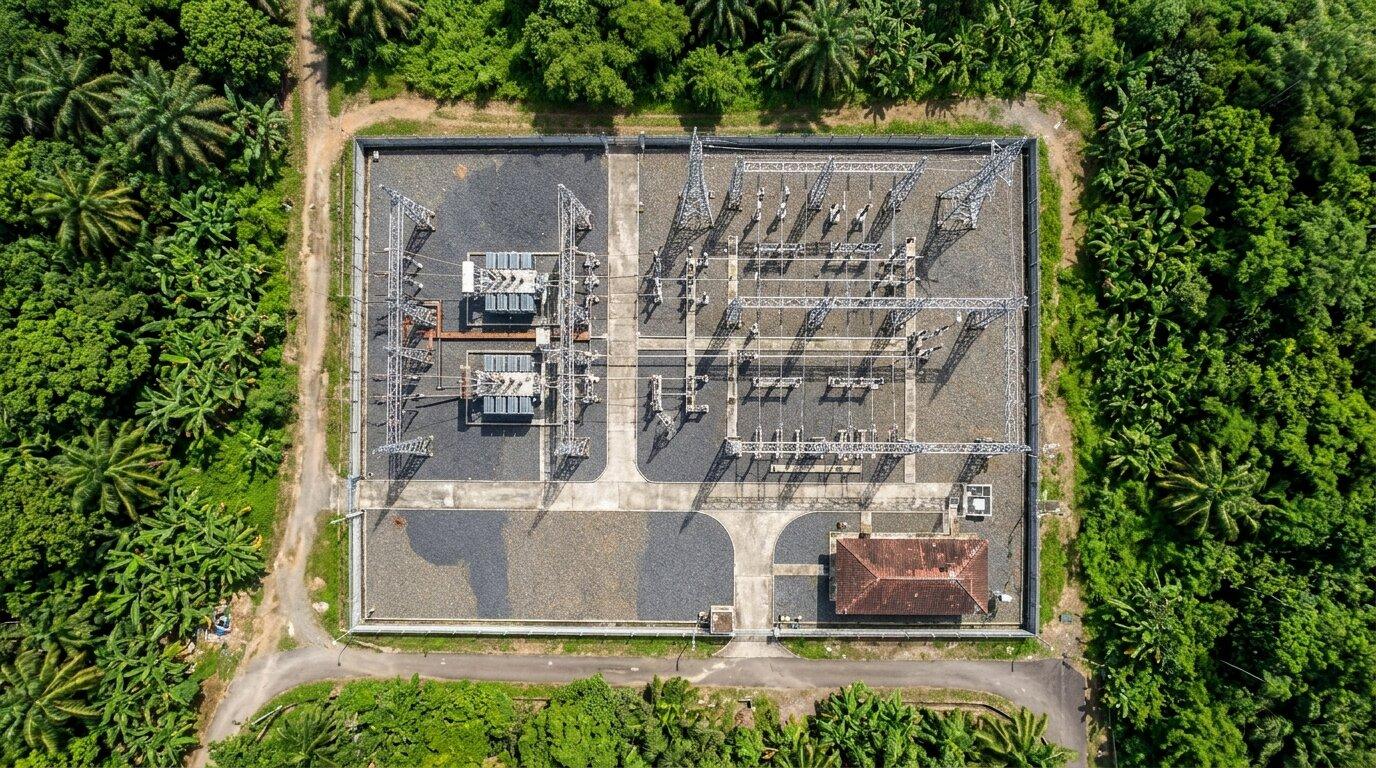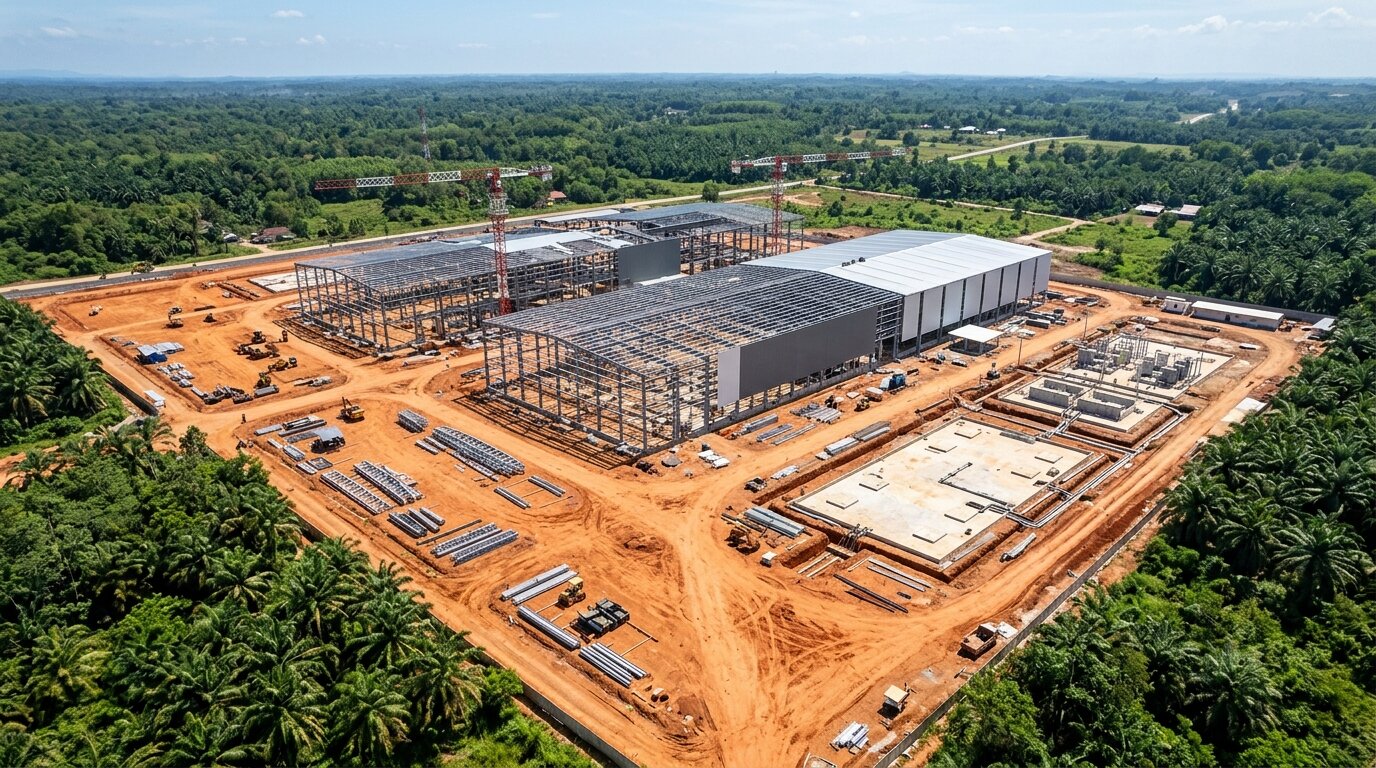
Data centres are expensive to build, and AI campuses more so: dense power, liquid cooling and heavy electrical plant all add cost. Very few projects of this kind are funded on the strength of a site and a business plan alone. Construction capital, and debt in particular, follows contracted demand. In data centre language, that contract is off-take.
This piece explains the main forms off-take takes, why it is so hard to secure before anything is built, and how well-run projects get around the problem in Indonesia.
What off-take means
Off-take is a customer's commitment to take, and pay for, capacity in the facility. It comes in several forms:
- Build-to-suit lease. A single customer, often a hyperscaler, commits to a long-term lease of a building designed to its specification. See build-to-suit.
- Wholesale lease. A customer takes a whole hall, or a large block of power, in a multi-tenant campus.
- Colocation contracts. Many smaller customers rent racks, cages or suites. Common in operator-led campuses, but harder to finance before construction.
- Capacity reservation. A customer pays to hold future capacity, often with a commitment to sign a lease once agreed milestones are met.
- Compute agreements. For AI, a GPU-as-a-Service provider may commit to the space and then sell compute to its own customers.
From a funder's point of view, the strongest off-take is long, signed with a creditworthy counterparty, covers most of the capacity and does not let the customer walk away easily. Shorter or partial commitments can still work, but they usually mean more equity and less debt.
The chicken-and-egg problem
Here is the difficulty. Customers will not commit to capacity that may never be built. They want to see land secured, power confirmed, permits on track and a credible delivery partner. Funders will not commit construction capital without the customer. Each side waits for the other.
Projects that break the deadlock spend a relatively small amount of development capital removing the biggest risks before they ask for the large commitments. In practice that means:
- 1.Securing the land on terms that leave time for the rest of the work.
- 2.Establishing a credible grid connection path with a realistic energisation window.
- 3.Starting licensing and environmental work so the timeline is clear.
- 4.Producing a concept design that matches what AI customers actually need.
- 5.Bringing in a delivery partner or operator with a track record.
With that package in hand, a customer can sign with conditions tied to milestones, and funders can see a path to contracted revenue. Customers will also want to know who they deal with if something goes wrong, so the delivery and operating roles need to be clear.
Phasing the money
AI campuses are usually built in phases, and funding follows the same pattern. Development capital takes the project to a signed customer and a construction-ready site. Construction funding, a mix of equity and debt, builds the first phase against the first off-take. Later phases are funded as new customers sign, often on better terms once the campus has proved itself. Each stage should have a clear decision point: what must be true to move on, and what happens if it is not.
Phasing only works if the later phases were planned at the start: land, power and permits for the full build-out, not just phase one. That is the core of our Growth work, with power planned for every phase.
Terms that matter in Indonesia
- Currency. Off-take contracts are often priced in US dollars while some costs and revenues are in rupiah. Agree how currency risk is shared.
- Power costs. Electricity is the largest operating cost. Decide whether tariff changes pass through to the customer.
- Milestones and conditions. Tie commitments to power, permits and construction milestones, with clear consequences if they slip.
- Specification change. AI hardware moves fast. Agree how changes in density or cooling are handled after signing.
- Local structure. The contracting entity, usually a PT PMA, needs the right licences to provide the service. Check with legal counsel.
How risk shows up in the price
Every risk a customer takes on is reflected in the terms it offers. A customer signing before power is confirmed will want a lower price, stronger exit rights, or both. The same customer signing once land, power and permits are secured will accept firmer terms, because less can go wrong. That is the financial case for development work: each risk retired before signing improves the off-take, and a better off-take improves the size and cost of the debt it can support.
Common mistakes
- Approaching customers before the power story can survive their questions.
- Designing the building first, then trying to fit the customer's hardware into it.
- Signing an off-take without clear milestones, then losing the customer when one slips.
- Planning only the first phase, so later customers find no room to grow.
What customers look for
Large buyers of capacity in Indonesia tend to ask the same questions: when will power be available, and how firm is that date; is the land secure and the title clean; will the building handle the density and cooling of their hardware; who will build and operate it; and how does the campus grow if they need more. A project that can answer all five clearly stands out from a market where many sites can answer only one or two.
What this means for you
If you are an investor, look for projects that retire development risks in a deliberate order, with off-take as the goal. If you are a hyperscaler or AI compute buyer, early engagement with conditional commitments is how you get capacity on your timeline. If you own land, a site with a credible power story is what turns a customer's interest into a contract.
We bring the customer, the capital and the site to the table at the same time. Talk to us about where your project stands, or run it through the site check.