Customers buying data centre capacity increasingly want to know where the power comes from. Hyperscalers and large enterprises have public climate targets, and AI workloads draw so much electricity that the question is hard to avoid. For anyone building in Indonesia, that is both a challenge and an opportunity.
The challenge is that most of Indonesia's electricity still comes from fossil fuels, with coal the largest single source. The opportunity is that few countries have renewable resources on Indonesia's scale.
The resources
Geothermal stands out. Indonesia sits on the Pacific Ring of Fire, holds around 40% of the world's estimated geothermal resources and already has the second-largest installed geothermal capacity in the world. Geothermal plants run around the clock, which suits a data centre load far better than intermittent sources.
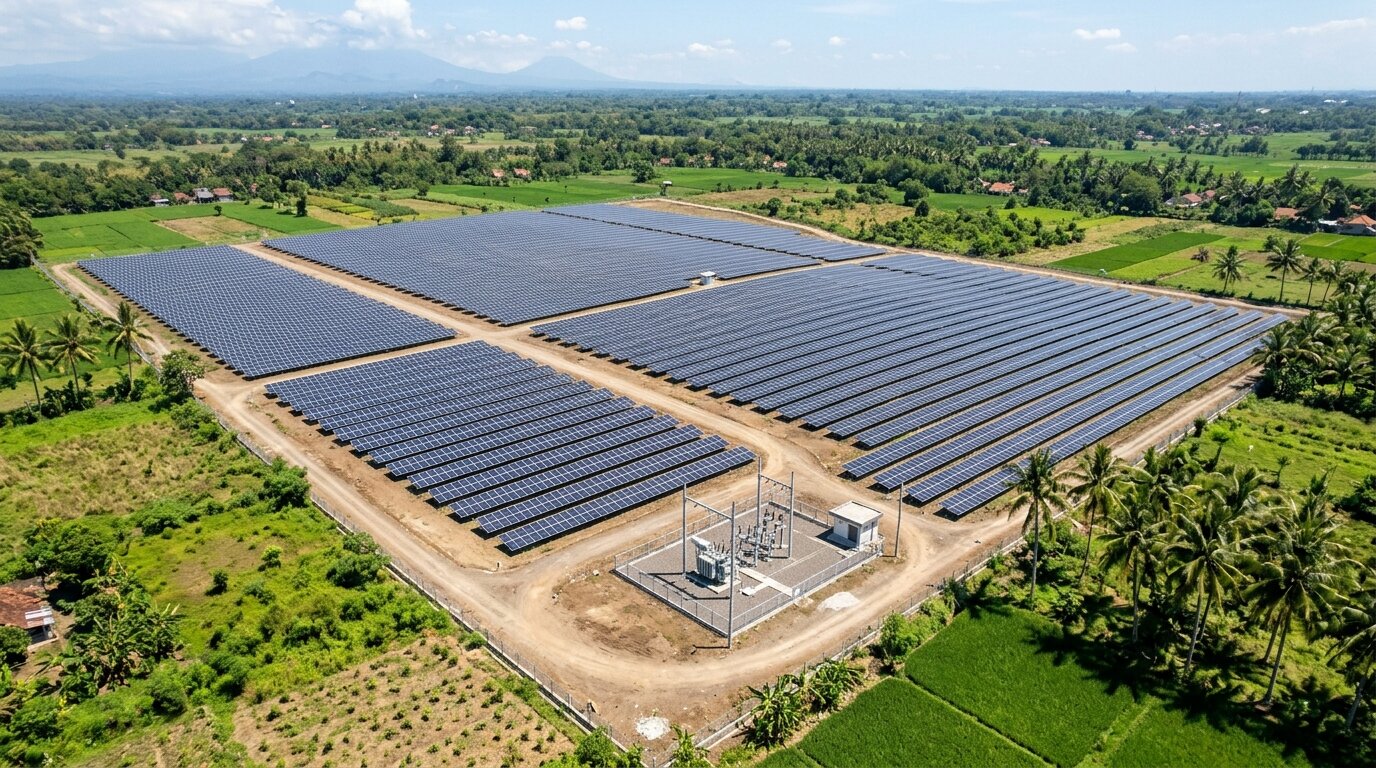
Hydro is the other large, steady resource, with significant potential in Sumatra, Kalimantan, Sulawesi and Papua. Solar is plentiful across the archipelago, including floating solar on reservoirs, though it only generates in daylight. Wind is more limited in most of the country.
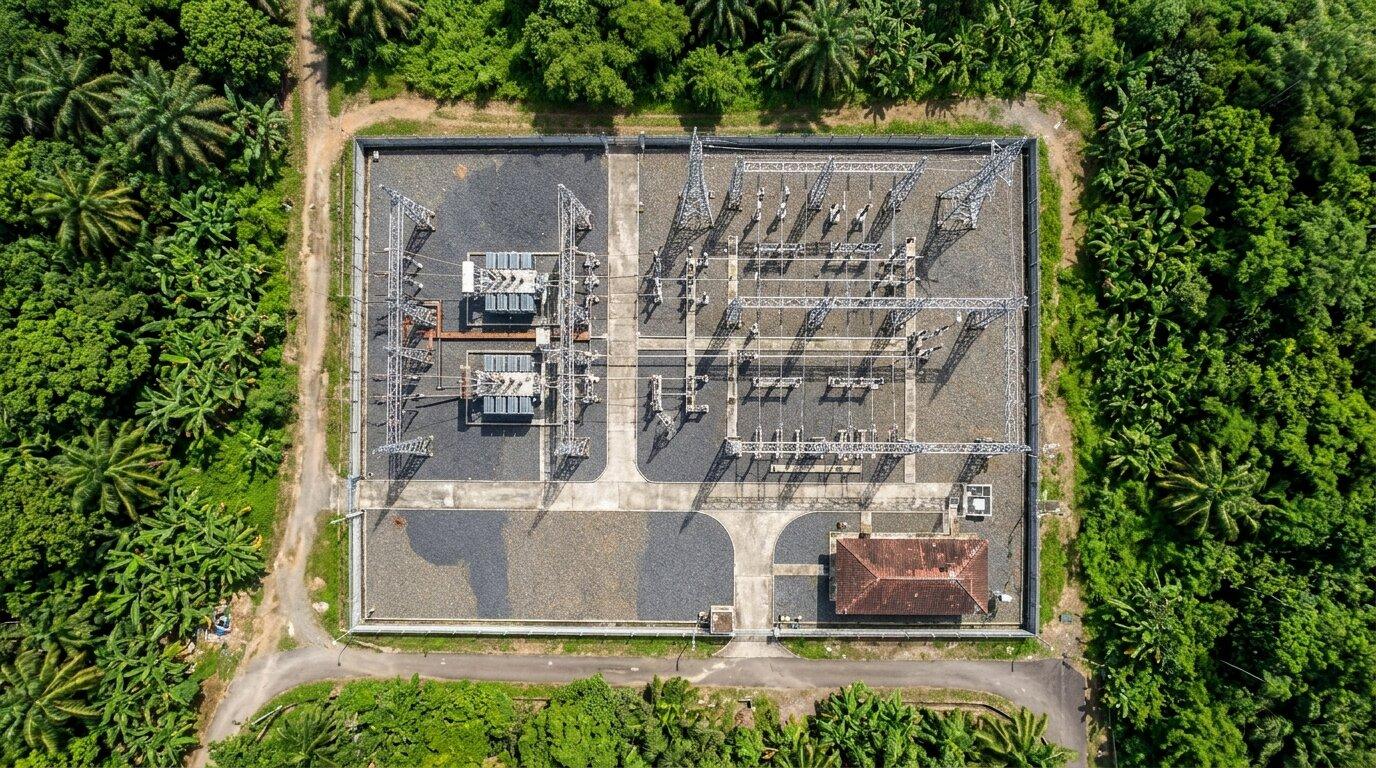
The catch is geography. Geothermal fields sit in volcanic highlands and hydro sits on rivers, often far from the industrial estates where data centres cluster. The power has to travel through the grid, which brings every conversation back to PLN.
Transmission is being built out to connect resource-rich regions with the centres of demand. As those links arrive, more renewable supply should reach sites on the main grids, but the timing is uncertain and varies by region.
The routes to clean power
In practice, a data centre in Indonesia has four broad options, and most strategies combine more than one.
- Renewable energy certificates. PLN sells RECs that let a customer claim renewable generation from its portfolio. They are the quickest route and need no new infrastructure, but they match consumption over a year rather than hour by hour, and some customers want more.
- Green supply products through PLN. PLN has offered arrangements that link a customer's supply to specific renewable generation. Availability, terms and volumes vary, so raise them early.
- On-site generation. Rooftop and ground-mounted solar on the campus help at the margin. For an AI campus, on-site solar usually covers a small share of total demand.
- Dedicated projects. A new geothermal, hydro or solar project built to serve the campus gives the strongest claim. Direct private supply over PLN's network is limited, and the rules have been under discussion for some time, so structures need careful legal work. See PPA.
What the national plan says
PLN's ten-year supply plan, the RUPTL, sets out where new generation and transmission will be built. Recent plans include a large share of new renewable capacity, along with the transmission needed to bring it to demand centres. For a developer, the RUPTL is worth reading closely: it shows where the grid is likely to strengthen and where renewable supply may become easier to source.
Plans change and projects slip, so the RUPTL is a guide rather than a promise. It is still the best public view of where Indonesia's power system is heading, and a useful input when you rank sites. Look at planned transmission as closely as planned generation, because a new line can matter more to a site than a new plant.
Power-led site selection
Most data centres choose a site for its customers and connectivity, then look for power. For the largest AI campuses, that logic can reverse. Training workloads are less sensitive to latency than consumer-facing services, so a campus can sit closer to the energy than to the users.
That is why regions such as Sumatra belong on the long list. Geothermal and hydro resources, available land and a growing transmission network make some areas candidates for campuses chosen for their energy first. These are long-horizon projects with real risks, from transmission to fibre and supply chains, but they are where very large, very clean capacity is most likely to come from. Fibre routes, staff and access roads all need to follow the power.
Firming intermittent supply
Solar generates in daylight and varies with cloud cover. A data centre draws power around the clock. Bridging the two means storage, firm renewable sources such as geothermal and hydro, or relying on the grid for the gap. Batteries are increasingly paired with solar to shift output into the evening, but storing enough energy to carry a large campus overnight is expensive. For most AI campuses the realistic aim is a blend: firm renewables where they can be sourced, solar where land allows, certificates to cover the balance, and the grid as the backbone.
Making claims you can defend
Customers and their auditors are becoming more careful about clean energy claims. A claim based on annual certificates is legitimate, but it is not the same as matching consumption hour by hour, and it should not be described as if it were. Keep clear records of what was bought, from whom and for which period. Be precise in contracts and marketing about what the campus is powered by. A modest, accurate claim does more for a customer relationship than an ambitious one that does not survive scrutiny.
Efficiency counts too
The cleanest kilowatt-hour is the one you never use. In a tropical climate, cooling is the largest overhead, and design choices make a real difference to PUE. We cover those choices in designing AI-ready data centres for the tropics.
What this means for you
- Decide early what your customers will accept as clean power.
- Raise green supply with PLN at the same time as the connection itself.
- Read the RUPTL for every region on your shortlist.
- Treat dedicated renewable projects as a long-term option with legal complexity, not a quick fix.
- Keep claims precise and documented, so they stand up to a customer's audit.
Our Gigawatts work brings these threads together into one power plan for every phase of a campus. If you are weighing the options, talk to us.